How Much to Charge for SEO Services

When it comes to SEO, one of the most frequently asked questions is, “How much should I charge—or pay—for SEO services?” The answer, unfortunately, isn’t as straightforward as many would hope. Whether you’re a freelancer setting your first rate or a business trying to budget for digital marketing, the pricing landscape for SEO can feel like a maze.
Key takeaways
- SEO is priced four ways: hourly, monthly retainer, one-off project, or performance-based. Retainers are the most common for ongoing work.
- In Pakistan, as of October 2026, small-business retainers mostly fall between PKR 25,000 and 80,000 a month; international agency rates run many times higher.
- Rates depend on scope, competition, experience, location and tool costs, so the same service can vary widely in price.
- Price on the value you create for the client, measured in leads and sales (GA4 key events), not rankings or hours alone.
- AI has made content and audits cheaper to produce, so what clients now pay for is strategy, judgement, accountability and visibility in AI answers.
With terms like the average price for SEO services popping up everywhere, it's easy to get lost in the wide range of numbers floating around online. In Pakistan you will see "SEO packages" advertised from a few thousand rupees a month, while international agencies charge thousands of dollars. So what's the difference, and more importantly, is it worth paying for SEO services at all?
Different Levels of SEO Services
Search Engine Optimization is not a one-size-fits-all service. The scope, complexity, and cost of SEO can vary significantly depending on your business goals, industry, and existing online presence. That’s why understanding the different tiers of SEO services is essential before setting a price or agreeing to one.
Basic SEO Services: The Foundation
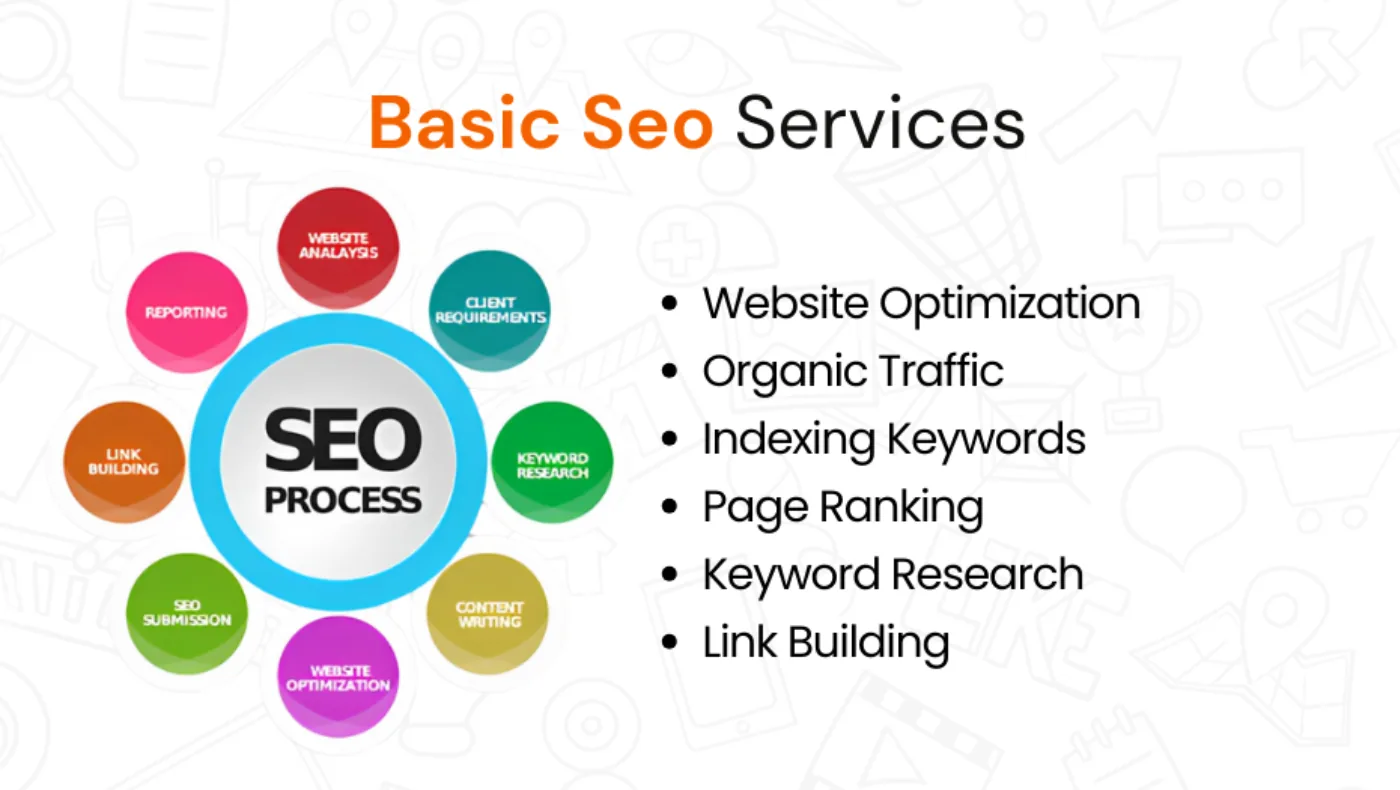
Basic SEO typically includes tasks like:
- Technical Audits: Identifying crawl errors, broken links, and improving site speed.
- On-Page Optimization: Optimizing meta tags, headings, and internal linking structures.
- Keyword Research: Targeting the right search terms for your niche.
This level is ideal for:
- Small local businesses just starting out
- New websites needing foundational SEO
- Clients with minimal competition in their industry
Intermediate to Advanced SEO Packages

As needs grow, so does the level of service. More advanced packages may include:
- Local SEO Strategy: Google Business Profile setup, citation building, local content strategies, and reputation management.
- Content Marketing & Blogging: Regular, SEO-optimized blog posts and landing pages tailored to keyword clusters.
- Link Building Campaigns: High-quality backlinks through guest posting, digital PR, and outreach.
- Competitor Analysis: Deep insights into what’s working for top competitors, and how to outperform them.
This level is typically suitable for:
- Medium-sized businesses aiming to grow organic visibility
- E-commerce stores competing in crowded niches
- Agencies working on behalf of clients in competitive industries
Common SEO Pricing Models
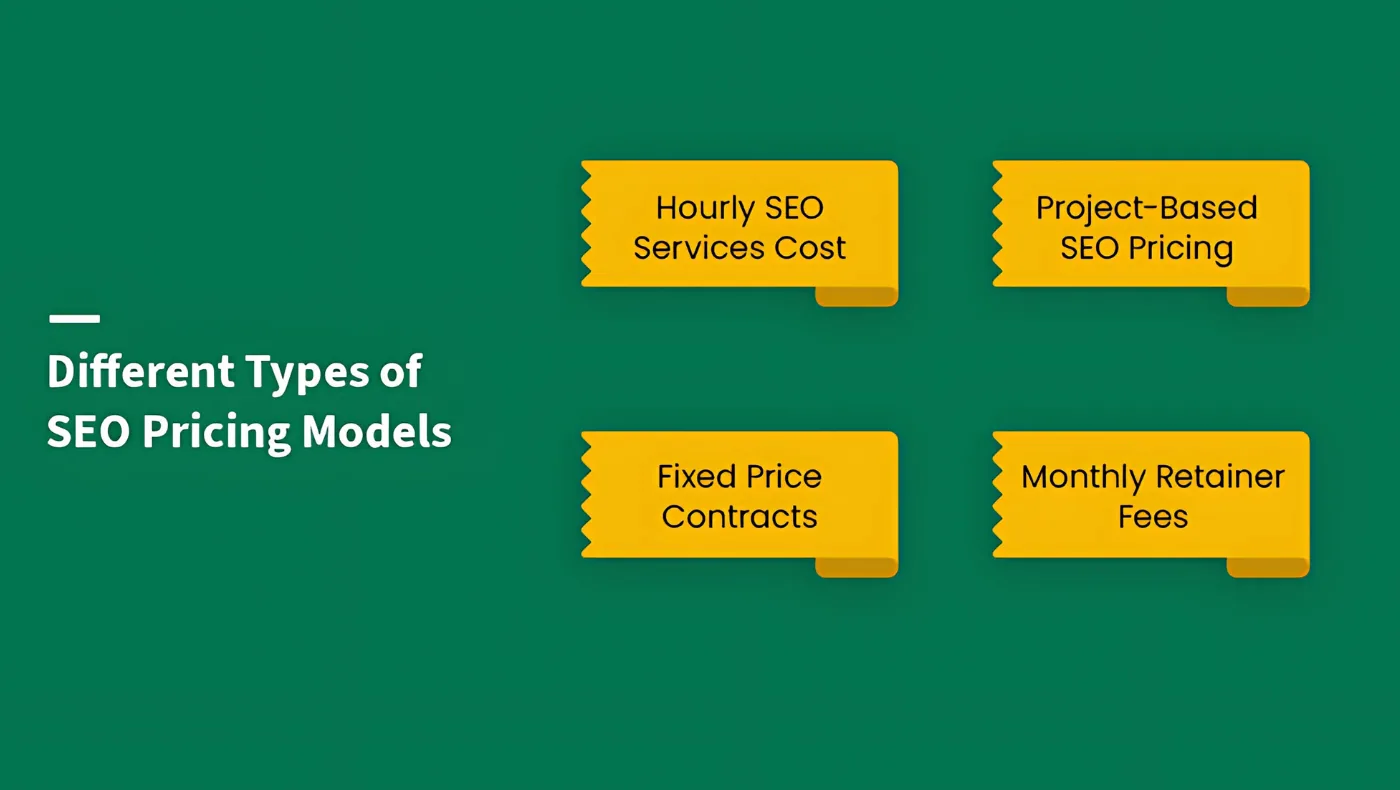
SEO services are available in various pricing formats, each tailored to meet the unique needs and project scopes of different clients. Understanding these models helps both providers and clients align expectations and values. Below are the most common pricing structures you’ll come across in the SEO industry:
1. Hourly Rate
This is a flexible option, ideal for short-term tasks or consultations. Clients are charged based on the number of hours worked.
2. Monthly Retainer
The most popular model for ongoing SEO. Clients pay a fixed monthly fee for continuous service, reporting, and strategy updates.
3. Project-Based Pricing
Used for one-time projects like website audits, migrations, or a content overhaul. Pricing depends on scope and complexity.
4. Performance-Based Pricing (Optional)
This model ties payment to actual results. Tie it to leads or revenue tracked as GA4 key events (calls, forms, orders), not to rankings or traffic: since AI Overviews, a page can hold position one and still lose clicks, so rankings no longer prove value. It's riskier for the provider but appealing to ROI-focused clients.
Comparison of SEO Pricing Models
| Pricing Model | Best For | Pros | Cons |
| Hourly Rate | Small tasks, ad hoc consulting | Transparent; great for quick fixes | Costs can add up fast; lacks a long-term strategy |
| Monthly Retainer | Ongoing SEO efforts | Stable income for providers; consistent progress | Clients may hesitate without immediate results |
| Project-Based | One-time SEO jobs | Clear scope; defined deliverables | Can miss opportunities for long-term improvements |
| Performance-Based | High-stakes, ROI-driven clients | Motivating providers, appealing to clients | Hard to guarantee SEO results; risk of manipulation |
What’s the Average Cost for SEO Services?
SEO pricing varies significantly based on factors such as provider type, service scope, and business size. Here’s an overview of typical international costs (US and UK clients, as reported in industry surveys over the past few years; Pakistani rates are in the table further down):
Hourly Rates
- Freelancers: $50 – $150/hour
- Agencies: $100 – $250/hour
Monthly Retainer
- Small Businesses: $500 – $1,500/month
- Mid-Sized Companies: $1,500 – $5,000/month
- Enterprise-Level: $5,000 – $20,000+/month
- Local SEO Campaigns: Approximately $800 – $1,500/month
Project-Based Pricing
- One-Time Projects: $1,000 – $5,000
- Comprehensive Audits or Migrations: $5,000 – $10,000
Is It Worth Paying for SEO Services?
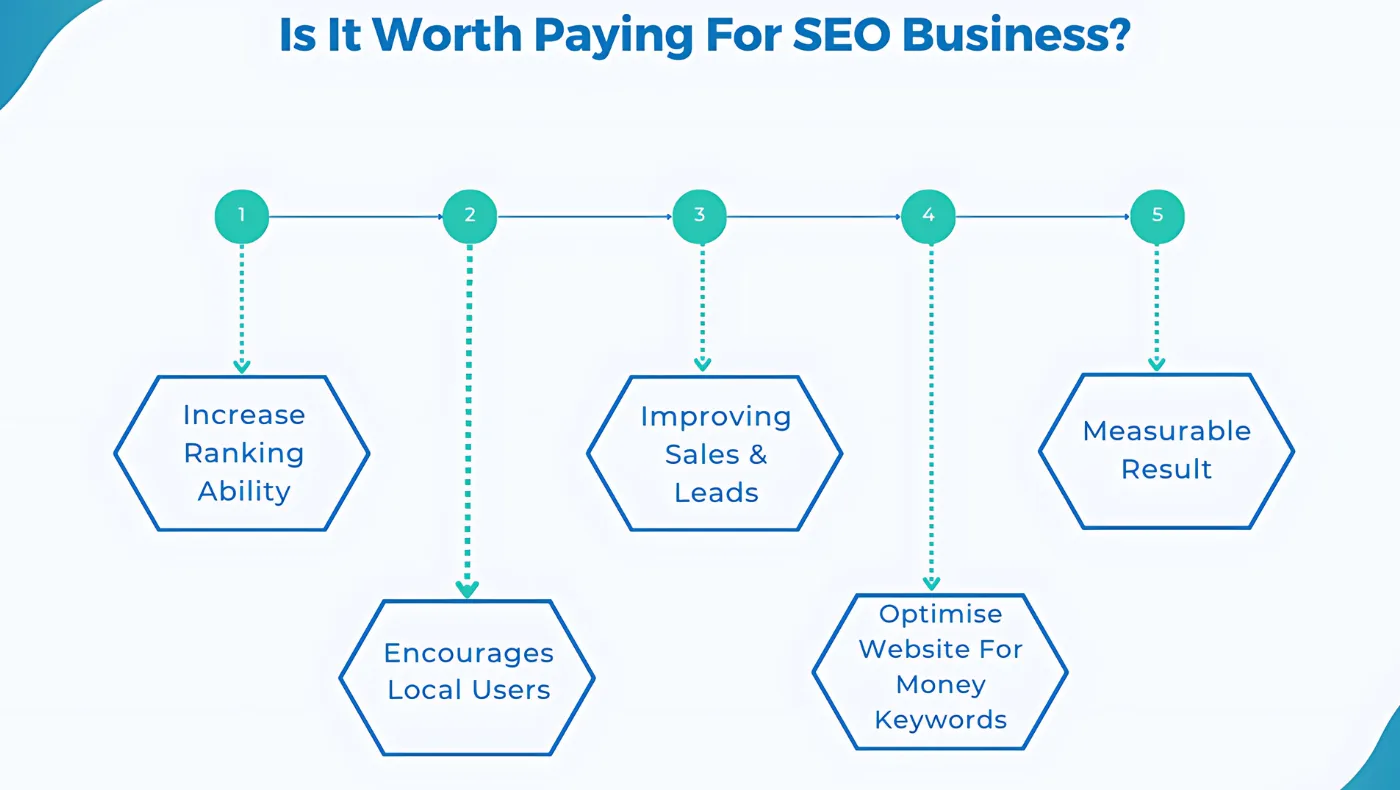
This is the question that sits at the heart of every SEO investment: Is it truly worth the cost? The answer depends on your expectations, timelines, and who you hire—but when done right, SEO can deliver returns that far exceed the upfront expense.
Short-Term vs. Long-Term Returns
In the short term, SEO might seem slow. It often takes 3 to 6 months to see noticeable growth in rankings and traffic. Unlike paid ads, which generate immediate clicks, SEO is about building a sustainable foundation for long-term growth.
But the long-term gains? That’s where the magic happens.
Once your pages rank well, they can continue attracting organic traffic for months—or even years—without ongoing ad spend. This means your cost-per-lead decreases over time, and your visibility becomes self-sustaining.
A Simple Way to Judge the Return
Rather than a made-up case study, do the arithmetic for your own business. Suppose a Lahore clinic pays PKR 50,000 a month and, after six months, its pages and Business Profile bring in ten extra enquiries a month, of which three become patients worth PKR 30,000 each. That is PKR 90,000 of new revenue a month against a PKR 50,000 fee, and the pages keep working after the campaign ends. Put your own numbers in: fee, months to results, enquiries, conversion rate, average sale. If the sum does not work even with optimistic numbers, SEO is the wrong channel for that business right now.
Why SEO Is a Long-Term Investment
- Sustainable traffic: You own the rankings—you’re not renting clicks like in PPC.
- Compounding results: Great content and backlinks build authority over time.
- Stronger brand trust: Appearing in top organic spots builds credibility.
- Better user experience: Technical SEO improves site performance and navigation.
How to Set the Right Price for Your SEO Services
If you’re offering SEO as a service—whether as a freelancer or part of an agency—pricing your services can feel like walking a tightrope. Go too low, and you undervalue your work. Go too high, and you risk scaring away potential clients. The key lies in setting a rate that reflects the value you bring, not just the time you spend.
What to Consider Before Setting Your Rates
- Skill Level & Experience:
Are you just starting, or do you have years of proven results? The more experienced you are, the more you can charge. - Location:
SEO pricing varies significantly across regions. A freelancer in Pakistan might charge less than someone in the U.S. or UK, even for similar quality work, simply due to cost-of-living differences. - Time Investment & Scope:
Some clients only require minor on-page adjustments. Others require full audits, content strategy, and monthly link building. Factor in how much time each task will realistically take. - Tools & Subscriptions:
Using premium tools like Ahrefs, Semrush, Surfer SEO, or Screaming Frog? Ensure your pricing covers these expenses.
Tip: Price Based on Value, Not Just Time
Charging hourly can trap you in a time-for-money cycle. Instead, think in terms of outcomes:
- Are you helping clients rank for high-converting keywords?
- Will your work increase their leads or sales?
- Can you offer bundled packages that include ongoing strategy?
If your SEO strategy brings in PKR 3 million of new revenue a month, a PKR 150,000 retainer becomes a no-brainer; the same logic applies at USD 10,000 against a USD 1,500 retainer for an overseas client.
Boosting Your Perceived Value
- Show case studies and data-backed results.
- Offer detailed proposals with clear deliverables.
- Communicate progress through transparent monthly reports.
- Educate your clients—when they understand what you’re doing and why, they’ll trust your pricing.
Red Flags: When Cheap SEO Becomes Expensive
Everyone loves a good deal, but when it comes to SEO, going cheap can ultimately cost far more in the long run. If a service sounds too good to be true, it probably is. While low-cost SEO might seem like a smart budget move, it often leads to poor results, wasted time, or even penalties that can damage your site’s performance for years.
The Hidden Risks of Underpricing
Many clients gravitate toward the lowest quote, unaware of what they are purchasing. Low-cost SEO often means:
- Minimal time spent on your campaign
- Outdated tactics that don’t reflect current search engine guidelines
- Generic, copy-paste strategies that lack customization
In most cases, you’re not saving money—you’re paying for a lack of expertise.
Black-Hat Practices and Outsourced Shortcuts

Cheap SEO providers may cut corners using black-hat techniques like:
- Keyword stuffing
- Hidden text or cloaking
- Spammy backlinks from link farms or PBNs
- Auto-generated or plagiarized content
These tricks may yield short-term boosts, but they almost always result in ranking penalties once Google catches on. Recovering from a penalty can cost more than getting SEO right the first time.
Bad SEO Damages More Than Rankings
Poor SEO doesn’t just reduce your visibility; it hurts your brand’s reputation. Visitors landing on a slow, poorly optimized site with generic content are less likely to trust or engage with your business. Worse, a sudden drop in rankings can destroy months (or years) of hard-earned progress.
If you’re a service provider, undercharging puts you in the same trap. You’ll struggle to deliver quality work while meeting unrealistic price expectations, leading to burnout, bad reviews, or lost clients.
In SEO, you often get what you pay for. And when it’s too cheap? You may end up paying more to fix the damage than if you had invested wisely from the start.
SEO Pricing in Pakistan
The international figures above are what US and UK clients pay. For Pakistani clients the market is very different. As of October 2026, these are the ranges we see quoted by freelancers and agencies in Lahore, Karachi and Islamabad; USD equivalents are approximate at current exchange rates.
| Service | Typical range (PKR) | Approx. USD | Notes |
|---|---|---|---|
| Freelancer, hourly | PKR 1,500 to 6,000 | USD 5 to 20 | Experienced specialists with overseas clients charge more |
| Local business retainer (one city, a few services) | PKR 25,000 to 80,000 per month | USD 90 to 290 | Google Business Profile, on-page work, a few articles, reporting |
| Ecommerce or national retainer | PKR 80,000 to 300,000+ per month | USD 290 to 1,100+ | Technical work, content programme, link building, several keyword groups |
| One-off technical audit | PKR 15,000 to 75,000 | USD 55 to 270 | Depends on site size; migrations cost more |
| Content, per 1,000-word article | PKR 2,000 to 10,000 | USD 7 to 35 | Research-heavy or specialist pieces cost more |
Anything far below these ranges usually means raw AI output, no reporting and no accountability. If you are a provider, do not try to beat the lowest quote; explain what the client gets for the difference. If you are a client, ask what is actually delivered each month and compare quotes on that.
How AI Changes SEO Pricing
Since 2024 the biggest pricing conversation in SEO has been AI, in three ways.
- Content costs less to produce. A first draft now takes minutes, so clients rightly refuse to pay 2023 prices for generic articles. What still costs money is research, interviews, original data, fact-checking and editing, and Google's scaled content abuse policy punishes sites that skip those steps. Price content on the expertise added, not the word count.
- Audits are faster. AI-assisted crawling and reporting cut the hours in a technical audit. Charge for the recommendations and the fixes, not the hours the crawler ran.
- Clients ask for AI visibility. Businesses want to appear in Google's AI Overviews and AI Mode and in ChatGPT-style answers. Agencies now sell this as GEO or AI visibility work. The honest version is a deliverable: structured, specific pages, clear expert statements, consistent brand facts across the web, and monthly tracking of where the brand is cited. Price that as an add-on to a retainer, and refuse to guarantee citations.
The net effect is that the hourly model is becoming harder to defend, because the hours are shrinking, while retainers and project fees tied to outcomes are easier to justify.
Checklist: What to Define Before You Quote an SEO Price
Most pricing disputes start with a vague scope. Before you send a number, pin down these points in writing. They protect you from unpaid extra work and help the client compare quotes fairly.
| Item | Question to answer |
|---|---|
| Deliverables | How many pages optimised, articles written or links built each month? |
| Starting point | Is there a technical audit first, and is it priced separately? |
| Content | Who writes, edits and uploads content: you or the client? How is AI used and who checks the facts? |
| Development | Who fixes technical issues that need a developer, and who pays for that time? |
| Reporting | What is reported (impressions, leads in GA4 and Search Console, AI citations) and how often? |
| Tools | Are paid tool costs included in the fee or billed on top? |
| Term | Minimum commitment, notice period and what happens to content and accounts if the contract ends. |
Tip: Offer two or three clearly different packages instead of one price. Clients find it easier to choose between options than to accept or reject a single number.
Frequently asked questions
What is the average cost of SEO services in the US and UK?
Industry surveys published over the last few years consistently put US small-business retainers between about USD 1,000 and 5,000 a month, freelancers at USD 50 to 150 an hour and agencies at USD 100 to 250 an hour, with UK small businesses typically paying GBP 500 to 2,000 a month. Treat these as broad international benchmarks as of October 2026; a Pakistani provider working for overseas clients can price within them, while local clients pay far less.
Is it worth paying for SEO if I have a new website?
Yes. Investing in SEO from the outset helps establish your website on a solid foundation. A well-optimised site will be indexed faster, build authority more quickly and avoid costly technical or content errors that are expensive to fix later. Results take time, but the earlier you start, the sooner you benefit from long-term organic growth, and a new site is cheaper to set up correctly than to repair.
How long does it take to see SEO results?
Typically it takes 3 to 6 months to begin seeing measurable improvements, depending on your industry, level of competition and the website's current state. Real momentum often builds after 6 to 12 months, especially for newer websites. Measure progress in Search Console impressions and GA4 leads rather than rankings alone, because a page can rank well under an AI Overview and still get fewer clicks than it used to.
Should I charge extra for AI visibility or GEO work?
You can offer it as a deliverable, but be honest about what it is: clear, specific, well-structured pages with original data and expert statements, the same things good SEO already needs. Charge for the extra work of tracking brand mentions in AI Overviews, AI Mode and ChatGPT-style assistants and for building citable assets. Never guarantee citations; nobody controls what an AI answer quotes.